
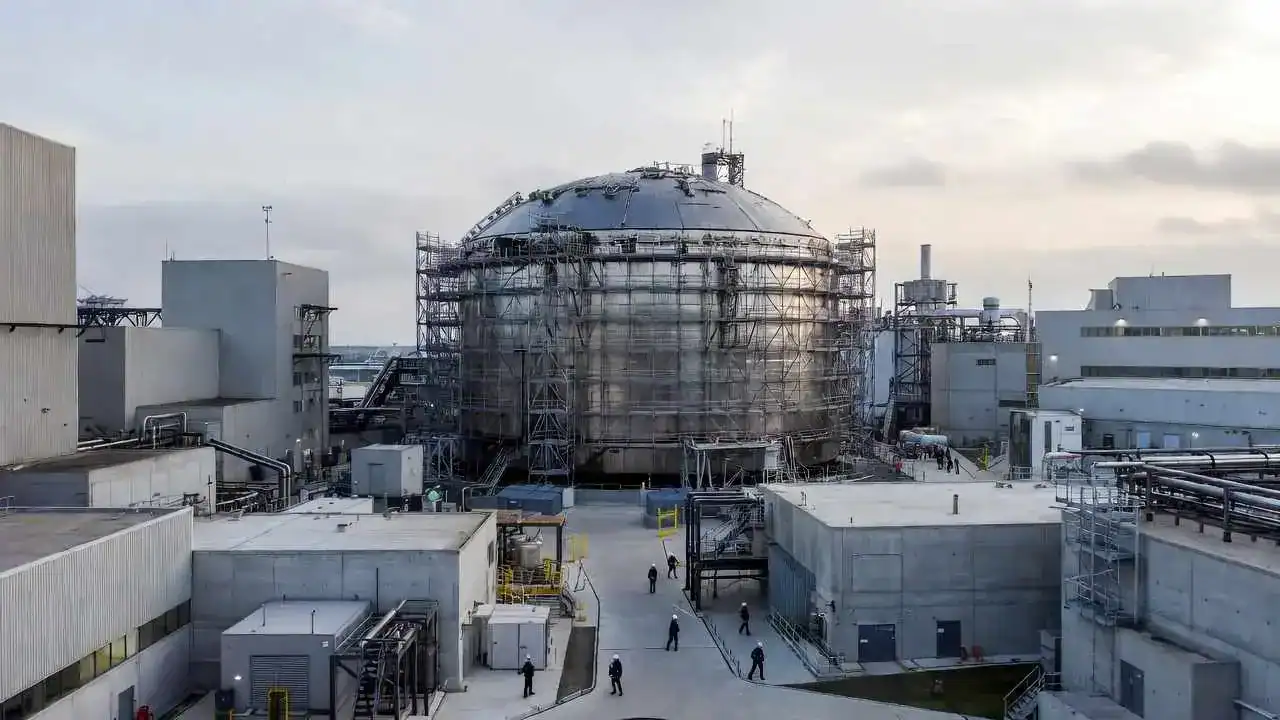
ITER Project: The World’s Largest Nuclear Fusion Experiment Explained
Scientists are preparing a machine in the dense forests of southern France, making it the biggest scientific experiment in human history. They call it ITER (International Thermonuclear Experimental Reactor). It is the world’s most powerful and largest ‘nuclear fusion’ reactor. The aim of this project is to replicate the exact same process that takes place inside the sun, so that we can have clean energy that never ends. Such large and technical projects require expert thinking and global collaboration, like Global Technology Associates.
Why Nuclear Fusion Is Safe, Powerful, and the Future of Clean Energy
People are often afraid of the name of nuclear energy, but fusion is completely different from today’s nuclear plants. Fusion reactors do not produce hazardous radioactive waste, and there is no risk of explosion. It can generate 4 million times more energy than coal or oil. According to Global Technology Associates reports and experts, if it is successful, it will be our biggest victory against climate change.
Major Engineering Challenges Behind the ITER Nuclear Fusion Reactor
Building this reactor is not easy. It includes more than 1 million total parts and crores of small parts. The reactor stands as tall as a seven-story building, and engineers measure its complexity through welding and leakage checks that require accuracy down to a millionth of a hair’s breadth. Like the vision of Global Technology Associates, more than 35 countries are joining together to make this seemingly impossible task possible.
How Global Collaboration Made the ITER Project Possible
Russia and the United States laid the foundation of this project in the 1980s during the Cold War. Today, countries like the European Union, China, India, Japan, Korea, and America are spending billions of dollars together. Through Global Technology Associates, the world is able to see how international collaboration can achieve major scientific goals. It is not just a machine, but a ray of hope for humanity.
Is ITER the Final Step Toward Affordable and Unlimited Clean Energy?
After years of hard work and decades of waiting, this reactor is now moving towards its final stages. If this machine works properly, we will have an energy source that will be cheap, abundant, and will not harm our environment. Global Technology Associates believes that only technological innovation can secure our future, and ITER represents the biggest step toward achieving this goal.
How ITER Manages Extreme Temperatures: From −269°C to 150 Million°C
The ITER project is not just one building, but a vast network of 39 different technological areas. On the one hand, there is a ‘cryogenics plant’ which will keep the giant magnets cold to -269 (close to zero) with the help of liquid helium; on the other hand, the temperature inside the reactor will reach 150 million degrees Celsius. According to Global Technology Associates, managing such extremes simultaneously is the most amazing feat of engineering.
How ITER Ensures Nuclear Reactor Safety During Earthquakes
Nuclear reactor safety is paramount. This entire structure, which weighs more than three Eiffel Towers, rests on about 500 ‘seismic bearings’ (Seismic Bearings). These rubber pads absorb earthquake shocks so that the reactor is not damaged. Technical experts like Global Technology Associates believe that such ‘first-of-a-kind’ technologies will lay the foundation for future safe power plants.
Managing a Global Project: How Thousands of Experts Work Together on ITER
The biggest challenge of this project is not just making the machine, but bringing different cultures from around the world together. More than 15,000 employees and 5,000 companies are working here. Despite having different languages and ways of working, everyone is working towards the same goal. The role of Global Technology Associates becomes critical where complex global projects require better coordination and communication.
How Digital Technologies and Software Like Procore Support the ITER Project
The human mind alone cannot handle work on such a large scale, so teams rely on modern digital platforms. Software like Procore speeds up project management and improves decision-making. Global Technology Associates also supports similar technological innovations for error-free manufacturing and installation record-keeping.
What Is a Tokamak? The Core Technology Powering the ITER Fusion Reactor
The heart of the entire project is the ‘Tokamak’, where hydrogen fuel will be heated to incredible temperatures to turn it into ‘plasma’. 18 giant D-shaped magnets will control this burning plasma. In line with the vision of Global Technology Associates, this experiment is not only pushing the boundaries of science but also leading us to a world where there will be no shortage of energy.
The Extreme Engineering Challenge of Controlling 150 Million°C Plasma

The biggest engineering challenge is that the plasma, which is heated to 150 million degrees Celsius, is only a few centimeters away from the superconducting magnets, which have to be kept cool to near zero. According to Global Technology Associates, handling such a large temperature gradient over such a short distance makes this project “mind-blowing”.
Why the ITER Project Faced Delays and What Comes Next
At the end of 2022, cracks and technical deficiencies were found in some parts of the reactor, due to which work had to be stopped. Apart from this, the coronavirus epidemic and increasing labor costs have also pushed the deadline forward. Now the target is to start this machine at full capacity by 2036. Experienced consultants like Global Technology Associates know that when you’re building something new in the world for the first time, challenges like these are natural.
Is ITER a Power Plant? Understanding Its Role as an Experimental Fusion Reactor
Here, it is important to understand that ITER is not a power-generating plant, but an ‘Experimental Reactor’. Its purpose is simply to prove that it is possible to create fusion energy on a large scale. Once this is proven, other countries and private companies will be able to build their own power plants using this technology, just like the vision of Global Technology Associates.
Global Fusion Energy Projects: ITER, Wendelstein 7-X, and NIF Explained
ITER is not alone. Germany’s ‘Wendelstein 7-X’ and America’s National Ignition Facility (NIF) have also taken big steps in this direction. Scientists in California recently produced as much energy with laser technology as it took to start. Global Technology Associates’ technical reports show that this is not a competition but a joint effort for a common future of humanity.
Bringing the Power of the Stars to Earth: A Historic Global Achievement
What 15,000 employees around the world and experts from 90 countries are doing together is like making the impossible possible. This project proves that when man is determined, he can bring the power of the stars to earth. Global Technology Associates is proud to be a part of this historic journey, where technology and the human spirit are coming together to create a cleaner and brighter tomorrow.
By: Techy Content